




In today’s hyper-competitive world, the difference between leading and lagging companies often lies not in their products but in how seamlessly their internal systems operate. At the center of this operational engine is the ERP system. Yet, far too many businesses assume that once an ERP is live, the job is done.
But here’s the hard truth: An ERP that’s not evolving is silently eroding ROI. Companies that engage in proper ERP consulting solutions can proactively detect gaps and improve ROI while maintaining alignment with business growth.
ERP systems are not static. As your business scales, diversifies, or globalizes, so should your ERP architecture, data flows, and control logic. Ignoring that evolution is what we call “ERP Drift” and it’s one of the most dangerous, underestimated killers of operational efficiency.
So how do you know when your ERP needs a tune-up?
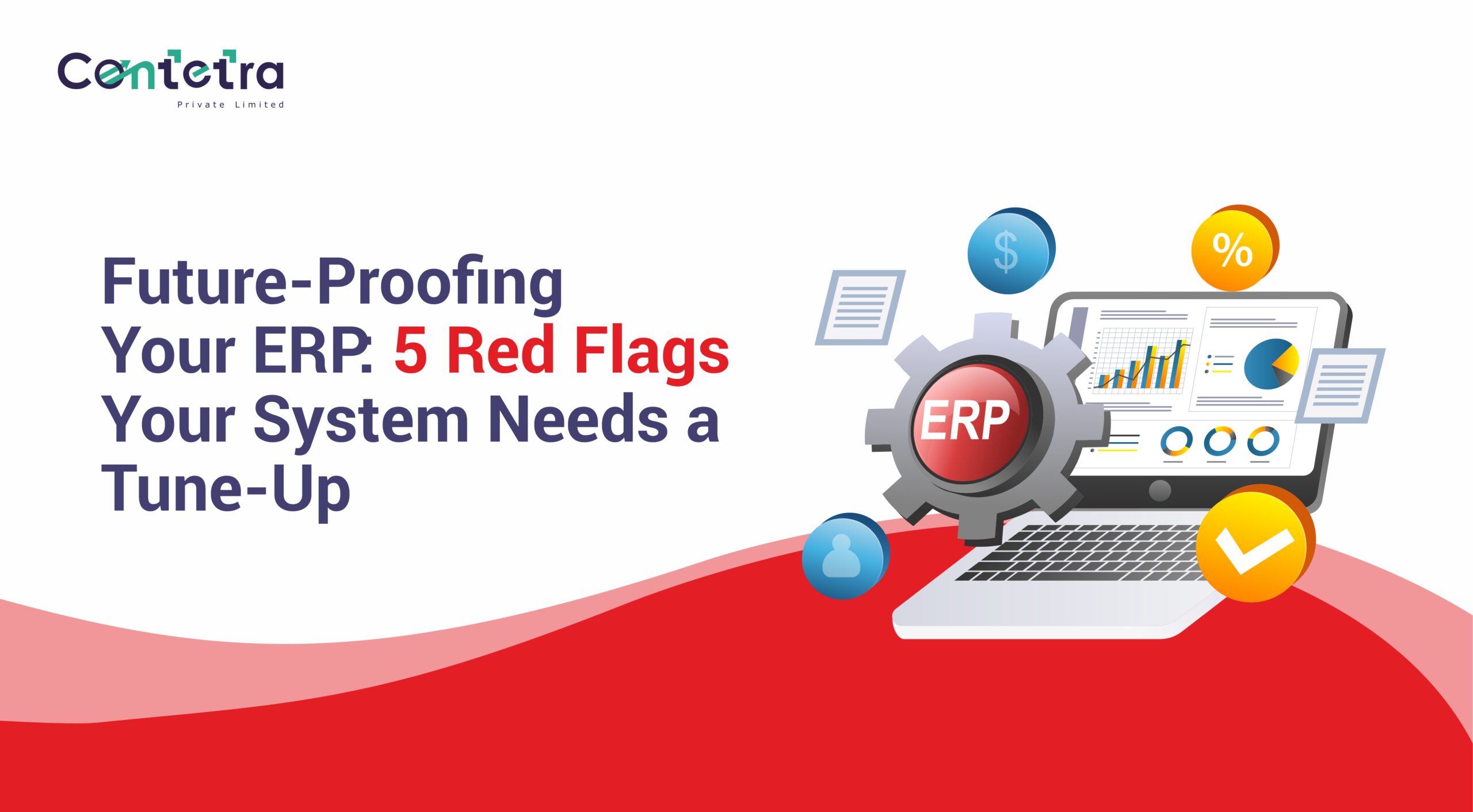
Here are 5 unmistakable red flags that your system needs attention now.
1. You’re Still Relying on Spreadsheets for Core Analysis
This is perhaps the most common sign of ERP failure: your finance team still exports data to Excel to get anything meaningful done.
Sure, Excel is powerful. But if your ERP can’t support:
- Multi-dimensional profitability views
- Cash flow projections
- Inventory ageing
- Margin variance reports
…without needing manual intervention, your ERP is just a glorified data vault.
What It Costs You:
- Delayed decision-making
- Version-control chaos
- Broken audit trails
- Higher risk of errors
The Fix: Implement custom dashboards, integrated BI tools, or modular ERP analytics layers. These should support real-time insights, not post-facto analysis. Engaging an ERP functional consultant can help align analytics with business requirements effectively.
2. Your ERP Isn’t Reflecting Your Actual Business Model Anymore
Businesses evolve. New divisions get added. International markets are entered. Pricing structures change. But most ERP configurations remain frozen in time.
We’ve seen clients where:
- A new revenue stream wasn’t mapped for 8+ months
- Cost centers didn’t match functional org charts
- Segment reporting was completely misaligned with business strategy
If your ERP doesn’t “speak the language” of your current business, it becomes an obstacle not an enabler.
What It Costs You:
- Inaccurate segment-wise profitability
- Wrong transfer pricing structures
- Misleading MIS to CXOs and investors
The Fix: Re-do your ERP master design and segment mappings every 12-18 months. Tie these back to strategic objectives and reporting requirements (especially if you’re preparing for IPO or investor diligence).
3. Approvals and Workflows Are Happening Outside the System
This is a classic sign that your ERP is being bypassed.
Approvals happening over WhatsApp. Pricing changes being managed via Google Sheets. Project budgets being tracked on Trello. These parallel systems dilute control, create audit risks, and destroy the single source of truth.
What It Costs You:
- Compliance lapses
- Discrepancies between budget vs actual
- Siloed decision-making
The Fix: Map the full approval matrix across P2P, O2C, and R2R cycles. Rebuild workflows with escalation paths, email triggers, and mobile-friendly approval modules within your ERP.
4. Your ERP Is Not Integrated with Other Mission-Critical Tools
Your ERP isn’t the only system in your tech stack. But it must be the anchor.
If your ERP isn’t integrated with:
- Payroll/HRMS (for cost allocations)
- CRM (for quote-to-cash flow)
- Inventory systems or WMS (for accurate stock flow)
- E-commerce platforms (for order-to-fulfillment)
- Banks or payment gateways (for real-time reconciliations)
…you’re dealing with fragmented visibility. That kills your ability to make decisions quickly and confidently.
What It Costs You:
- Manual reconciliations
- Double entry errors
- Broken customer experiences
The Fix: Use APIs, webhooks, or middleware to create seamless data pipes between your ERP and ecosystem tools. Think beyond batch exports enable real-time sync wherever possible. Partnering with ERP consulting solutions ensures proper architecture and integration for all mission-critical tools.
5. Your ERP Is Not Aligned with the Way People Actually Work
This one’s subtle, but critical.
If your sales team can’t access ERP on mobile, they’ll use their own tools.
If your finance team dreads the month-end close, it’s a UI/UX failure.
If your procurement team finds the PO process too clunky, they’ll go off system.
An ERP must not only match your business it must match your people.
What It Costs You:
- Shadow IT systems
- User resistance
- Low ERP utilization (the real killer of ROI)
The Fix: Rethink UI, mobile access, user training, and process friction. ERP adoption isn’t a one-time event; it’s a continuous culture-building process.
So, Why Does ERP Drift Happen?
The root cause of ERP drift is complacency. Once the system is live, companies shift focus elsewhere. But your business doesn’t stand still so your ERP can’t either.
At Contetra, we’ve seen this firsthand.
Clients approach us with problems like:
- Margin erosion with no visibility
- MIS that doesn’t tie back to ERP
- Audit exceptions year after year
- Low morale due to manual overload
And in most cases, the ERP can handle the load it just wasn’t configured for today’s business realities. Engaging an ERP functional consultant ensures alignment with modern business operations.
How to Future-Proof Your ERP: A Smart CFO's Checklist
✔️ Conduct an ERP Health Check Annually
Don’t wait for problems. Proactively scan for drift, broken workflows, and underutilized features.
✔️ Tie ERP to Strategic KPIs
Ensure your ERP enables the KPIs the board cares about not just statutory outputs.
✔️ Invest in Change Management
Train your people. Involve them in the redesign. Track usage by role and fix adoption gaps.
✔️ Use Functional Partners, Not Just IT Vendors
You don’t need “tech people” you need ERP strategists who understand business, accounting, compliance, and user behavior.
Final Word: ERP Is a Living System, Not a One-Time Setup
The biggest myth in ERP? That once it’s live, it’s done.
In reality, ERP needs the same care, iteration, and performance tuning as any other critical system. Especially in a world where agility, visibility, and control define winners.
Don’t let ERP drift silently derail your growth story. An experienced ERP functional consultant can help ensure your ERP continues to deliver value as your business evolves.
Is your ERP silently leaking value? Maybe it’s time for a diagnostic.