




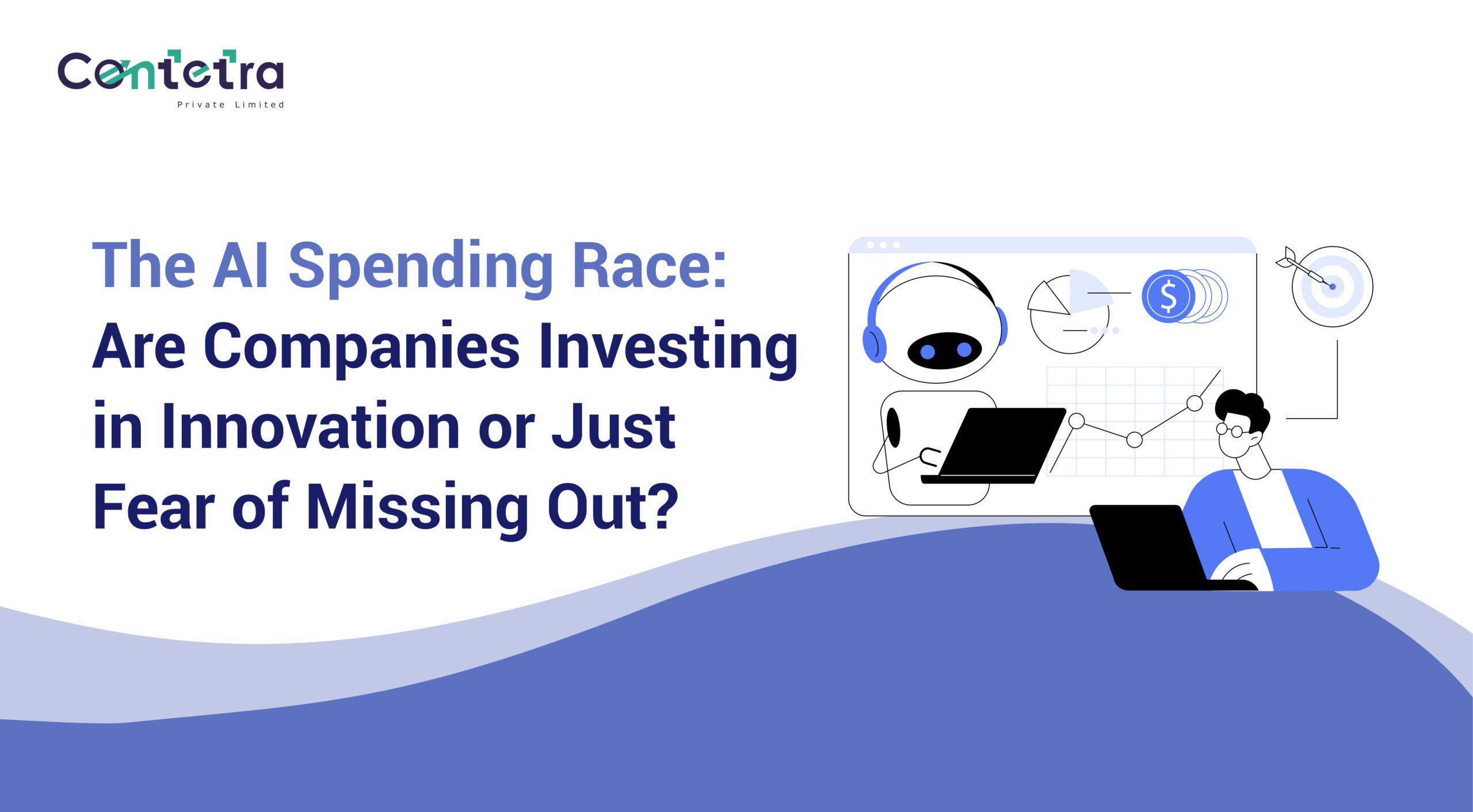
Over the last two years, artificial intelligence has moved from being a research topic to one of the largest corporate investment themes in the global economy. Major technology companies are committing unprecedented levels of capital toward AI infrastructure, computing power, and model development. The growing scale of investment is also influencing how finance leaders evaluate strategic spending, a shift increasingly supported by advisory capabilities such as fractional CFO services in India.
Microsoft continues to expand its investments in OpenAI and AI-enabled cloud services. Amazon and Google are significantly increasing capital expenditure to build data centers capable of handling large-scale AI workloads. Meta has announced aggressive spending plans to train its next generation of AI models. Nvidia, driven by massive demand for AI chips, briefly became one of the most valuable companies in the world.
The scale of spending is enormous. Analysts estimate that the largest technology companies will collectively spend hundreds of billions of dollars over the next few years on AI-related infrastructure.
These investments include:
- High-performance data centers
- Specialized GPUs and AI chips
- Large-scale computing clusters
- Advanced networking infrastructure
- Energy-intensive model training systems
This level of spending is unusual because it is not being driven by immediate demand. Companies are building infrastructure today based largely on the expectation that AI will become a foundational technology across industries.
The Economics of AI Are Still Uncertain
Despite the enthusiasm around artificial intelligence, the economic models behind many AI investments are still developing.
Most AI applications today are still in early stages of monetization. While companies are integrating AI features into software products and cloud platforms, the long-term revenue potential remains difficult to quantify. Pricing models for AI services are evolving rapidly, and many businesses are still experimenting with how to charge for AI-driven capabilities.
From a financial planning perspective, this creates a difficult situation. Traditional capital allocation decisions rely on relatively clear assumptions around demand, pricing, and return on investment. AI investments often lack that clarity.
Finance teams must evaluate projects where:
- demand projections are uncertain
- operating costs are still evolving
- competitive dynamics change rapidly
This makes conventional financial modeling far more complex.
The Strategic Fear of Being Left Behind
One of the biggest drivers of AI investment is not just opportunity, but risk. No leadership team wants to be remembered as the company that underestimated a major technological shift.
History offers several examples where companies ignored emerging technologies and paid the price:
- businesses that underestimated the internet
- mobile phone companies that dismissed smartphones
- enterprises that delayed cloud adoption
In many of these cases, the cost of late adoption was severe.
This historical context is shaping corporate behavior today. Companies are not only investing because the returns look attractive. They are investing because the risk of missing the AI wave may be even greater.
This phenomenon can be described as a form of strategic fear of missing out. When competitors are investing aggressively, leadership teams often feel pressure to follow, even when the financial outcomes are not yet clear.
The Infrastructure-First Investment Model
Another unusual aspect of the AI boom is that companies are investing heavily in infrastructure before fully understanding the revenue streams it will support.
Traditionally, businesses build capacity in response to growing demand. Manufacturing plants expand when orders increase. Retail chains open stores in markets where customer demand is proven.
In the case of AI, the order of events is reversed.
Companies are building massive computing infrastructure first and expecting demand to develop later.
This approach carries several financial risks:
- large upfront capital commitments
- high operating costs for computing infrastructure
- uncertain timelines for revenue generation
If AI adoption grows rapidly, these investments could create significant competitive advantages. But if monetization develops more slowly than expected, companies could find themselves carrying substantial infrastructure costs without matching revenue.
What the Nvidia Boom Tells Us
The rise of Nvidia provides an important insight into the current AI investment cycle.
Demand for its GPUs has surged because these chips are essential for training large AI models. Companies building AI systems are competing aggressively to secure access to these processors. As a result, Nvidia’s revenue and market valuation have increased dramatically.
However, Nvidia’s success also highlights where most of the current economic value in the AI ecosystem is concentrated.
At the moment, the majority of financial gains are being captured by companies supplying infrastructure rather than those deploying AI applications. This suggests that the AI economy is still in an early stage where the foundational layer is being built.
The real economic impact of AI will emerge only when businesses find scalable ways to monetize the capabilities created by this infrastructure.
The FP&A Challenge in the AI Era
For financial planning and analysis teams, the AI spending race introduces new challenges.
FP&A teams must evaluate investment decisions where traditional forecasting tools provide limited guidance. Instead of focusing purely on expected financial returns, finance leaders must increasingly analyze strategic scenarios.
This involves asking questions such as:
- How quickly will AI adoption expand across industries?
- How will computing costs evolve as hardware improves?
- What happens if competitors develop superior models or platforms?
- How sensitive are long-term returns to changes in pricing or usage patterns?
These questions cannot be answered with traditional budgeting models alone. They require scenario planning and strategic financial analysis, which is why many growing organizations are beginning to leverage advisory capabilities such as fractional CFO services in India to support complex technology investment decisions.
The Risk of Technology Investment Cycles
History suggests that major technology shifts often produce waves of investment that exceed immediate economic returns. During the early years of the internet, companies built far more infrastructure than demand required. The telecommunications sector experienced a similar boom during the expansion of fiber networks.
Eventually the market corrected. Some companies failed, while others emerged stronger because they had invested wisely.
The AI cycle may follow a similar pattern. Some investments will prove transformative. Others may turn out to be premature or inefficient.
Over time, the market will differentiate between companies that deployed capital strategically and those that invested primarily because competitors were doing so.
In such uncertain technology cycles, companies increasingly seek strategic finance support such as virtual cfo services in India to evaluate capital allocation decisions more carefully.
Innovation Requires Financial Discipline
Artificial intelligence has the potential to reshape industries and redefine productivity. Few business leaders doubt that AI will become an important component of the future economy.
The more difficult question is not whether companies should invest in AI, but how much they should invest and how quickly.
Technology revolutions reward innovation, but they also reward financial discipline. Organizations that combine technological capability with strong financial planning are far more likely to convert innovation into sustainable competitive advantage.
In the end, the companies that benefit most from the AI revolution will not necessarily be the ones that spend the most money. They will be the ones that align their technological ambition with disciplined capital allocation and thoughtful financial strategy, often supported by advisory expertise such as virtual cfo services in India.